
Sofa buying guide for Nepal
How to Choose the Right Sofa for Your Kathmandu Home in 2026
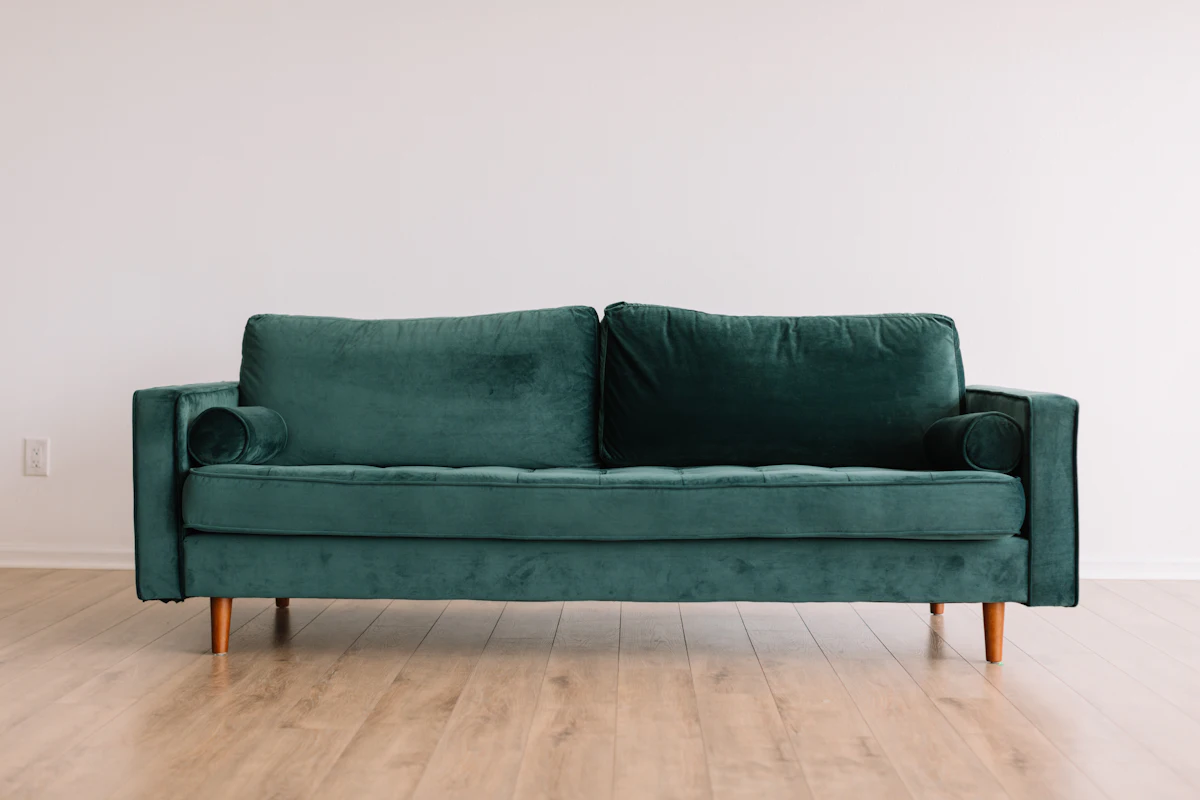
Buying a sofa in Kathmandu is not the same as picking one out of a catalogue photographed in Delhi or Bangkok. Our living rooms are smaller than the renderings suggest, our stairwells in Imadol and Satdobato apartment blocks are narrow, our monsoon is punishing on foam and fabric, and load-shedding still occasionally means no elevator on delivery day. After years of measuring homes across Boje Pokhari, Gwarko, Koteshwor and Lagankhel, we have a fairly clear picture of what actually works here and what looks good in a showroom but fails within two years.
This guide walks through the decisions that matter most: how to size a sofa for a real Nepali living room, which frame woods hold up, how foam density affects comfort and lifespan, whether fabric or leatherette suits Kathmandu's dust and dry-season conditions, and how to decide between an L-shape sectional and a traditional 3+1+1 arrangement. We will not quote any prices here — costs vary too much by fabric, size and finish to state a number honestly. Instead we explain what actually drives the cost up or down, so you can make a smart call when you come in for a quote.
Start with your room, not the catalogue
Most Kathmandu apartments built in the last fifteen years have living rooms between roughly ten and fourteen feet on the longer wall, often with a pillar, a TV console wall, and a balcony door eating into usable space. Before you fall in love with a five-seater L-shape you saw online, measure your actual room with the TV unit, dining table and walking paths already accounted for. Leave at least two and a half feet of clear walking space in front of any sofa, and measure your main door, stairwell landing and lift (if any) — not just the room.
This last point matters more than people expect. We have had to disassemble delivered sofa frames outside apartment gates in Bhaisepati and Ekantakuna because the stairwell turn was too tight for a rigid five-seater frame. A good workshop builds sofas with knock-down (KD) fittings for exactly this reason — the frame travels in sections and is bolted together inside your living room.
Measuring checklist before you order
Note the width of your narrowest turn on the staircase, the lift's internal depth if you live above the third floor, the ceiling height if you want a high-back design, and the wall length where the sofa will finally sit, including 10-15 cm clearance from the wall for cleaning.
L-shape sectional vs 3+1+1: which suits a Nepali living room
An L-shape (corner) sofa maximises seating in a squarish room and works well if your living-cum-dining space is open-plan, which is increasingly common in newer flats in Thaiba and Bhaisepati. It also gives one person a good lounging spot for watching TV, which matters in joint families where someone is often napping in the living room in the afternoon.
A 3+1+1 or 3+2 set is more flexible for narrow, rectangular rooms typical of older Lalitpur and Koteshwor houses, and it is far easier to move during a Dashain deep-clean or if you shift house later — each piece is lighter and fits through standard doorways individually. If you host large joint-family gatherings during Dashain and Tihar, a 3+1+1 layout is also easier to rearrange temporarily into a wider circle.
Frame wood: what actually holds up in our climate
The frame is the part you never see and the part that decides whether your sofa survives ten monsoons or three. Sal wood frames, when properly seasoned and kiln-dried before assembly, resist warping and hold screws and dowel joints far better than green or under-dried timber. Poorly dried frames — common in cheap imported sets — start creaking within a year as Kathmandu's humidity swings between the wet monsoon months and the dry Baisakh heat.
Some workshops use engineered pinewood or plywood-reinforced frames for lighter sections; these are acceptable for armrests and non-load-bearing parts but should not be the sole support under the seat. Ask specifically whether the seat rails and leg blocks are solid Sal or hardwood — that is where stress concentrates every time someone sits down.
Foam density and comfort layering
Seat comfort comes down to foam density, not just thickness. A thick but low-density foam feels soft in the showroom and sags into a hammock shape within a year. A well-built seat cushion usually layers a firmer, higher-density base foam with a softer top layer, wrapped in dacron or fibre for a plush surface feel without losing support underneath.
For a household with elderly members, choose firmer, higher-density seating that is easier to rise from — this is a request we get often for homes in Satdobato and Lagankhel with older residents. For a mostly-young household that lounges and watches long movies during Dashain holidays, a slightly softer top layer over a firm base works better.
Fabric vs leatherette vs genuine leather in Kathmandu dust and dry season
Kathmandu's dust — especially near unpaved lanes in Imadol, Thaiba or along the Ring Road — is a real factor in fabric choice. Woven fabrics like chenille and cotton-linen blends breathe well and feel comfortable but need more frequent vacuuming and are harder to wipe clean of dust and food spills. Leatherette (PU/PVC) wipes clean in seconds and resists dust, making it a common choice for households with young children or pets, but it can feel warm and slightly sticky in Kathmandu's few genuinely hot months, and it eventually cracks at friction points like armrests if the base material is low grade.
Genuine leather ages beautifully and breathes better than leatherette, but it needs conditioning to avoid drying out during the dry winter months and is more vulnerable to fading if the sofa sits in direct sunlight from an unshaded window, common in south-facing flats.
Comparing fabric options at a glance
Here is a quick comparison of the fabric families we work with most often for Kathmandu Valley homes.
What actually changes the cost of a sofa
Instead of numbers, think in terms of factors. Overall size and seat count is the biggest driver — a seven-seater L-shape naturally uses more frame timber, foam and fabric than a compact 3+1+1. Fabric grade matters: imported jacquard and performance fabrics cost more to source than standard cotton-blend upholstery. Frame wood quality, the number of storage or recliner mechanisms built in, cushion fill (foam plus fibre wrap versus foam alone), and custom sizing to fit an awkward corner all add to the workshop time and material cost.
Recliner or pull-out mechanisms should also be chosen with load-shedding in mind — we recommend manual lever or ratchet recliners over motorised ones for most Nepali homes, since a motorised recliner is useless during a power cut and adds a failure point that is expensive to repair locally.
Delivery, assembly and Dashain-season lead times
Custom-upholstered sofas typically need real workshop time for frame assembly, foam cutting and stitching — rushing this produces uneven cushions and loose joints. If you are planning for Dashain or Tihar, place your order well before mid-Ashwin; our workshop queue fills up fast in the six weeks before the festival as everyone wants new furniture at once. For urgent needs, ask us about ready or near-ready stock pieces that can be delivered faster than a fully custom build.
On delivery day, tell us in advance about narrow stairwells, tight lift doors, or any flight of stairs without a landing turn — our team carries knock-down tools and can disassemble armrests or backrests on site rather than damaging your walls or the sofa itself.
| Fabric type | Dust & spill resistance | Feel | Best for |
|---|---|---|---|
| Leatherette (PU/PVC) | High — wipes clean instantly | Smooth, can feel warm in summer | Homes with kids, pets, or heavy daily use |
| Cotton-linen blend | Moderate — needs regular vacuuming | Breathable, soft, matte | Living rooms used mainly for seating, not messy activity |
| Chenille / velvet-style | Moderate — traps dust in pile | Plush, warm-looking | Formal drawing rooms, guest-focused seating |
| Genuine leather | High, but sun-sensitive | Natural, ages well with care | South-facing rooms with curtains, long-term investment pieces |
Talk to the workshop
Not sure which size or fabric suits your living room? Call or Viber Niraj Furniture and book a free measurement visit anywhere inside Kathmandu Valley — we will bring fabric swatches and foam samples and give you a clear quote on the spot.
Related pages on our site
Questions readers ask us
Keep reading
 Complete Daijo Furniture Set in Nepal: What's Included and How It Is QuotedA room-by-room breakdown of a complete daijo (dowry) furniture set, who decides what, how finishes are matched across pieces, and what drives the quotation up or down.
 When to Order Wedding Furniture in Nepal: The Lagan Season Booking TimelineHow far ahead families should order daijo and wedding furniture, why Mangsir and Magh-Falgun fill first, week-by-week planning back from the lagan date, and how rush orders really work.
 Ordering Furniture Around Dashain and Tihar: A Realistic TimelineWorkshops slow down, cargo backs up, and everyone wants new furniture at once. Here is how to time your order so it actually arrives before the festival.